Confectionery Insights & News
Industry trends, private label manufacturing guides, and export knowledge from our Lahore workshop.
China has become a significant manufacturing base for Classic Gummy Bears, serving retailers, distributors, and private-label brands worldwide. Its advantages are practical: flexible production, broad ingredient access, efficient export infrastructure, and experience with customized molds. A buyer examining a Chinese supplier should look beyond colorful samples. Factory audits, batch traceability, allergen controls, laboratory testing, and dependable packaging records matter more than appearance alone.
Industry data supports continued interest in this category. Grand View Research estimates that the global gummy market will expand strongly through the decade, driven by convenient formats, playful textures, and functional confectionery innovation. Euromonitor International also identifies premiumization, reduced-sugar recipes, and product variety as important forces in sugar confectionery. These trends create opportunities for Classic Gummy Bears in supermarkets, online stores, promotional programs, and children’s gift assortments. However, market figures differ by definition. Some reports measure all gummy products, while others separate candy from supplements. Buyers should compare methodology carefully.
John Downs, President and CEO of the National Confectioners Association, has described candy as “a small, affordable indulgence that brings people joy.” That idea explains the product’s lasting appeal. A well-made gummy bear should feel soft but resilient, with clean edges, stable color, and balanced sweetness. Small details matter. A warm warehouse can affect texture. Weak seals can damage an otherwise excellent batch. Chinese suppliers with documented quality systems and export experience can reduce these risks, although no supplier should be trusted without verification. The best partnership combines competitive pricing with transparent communication, realistic lead times, and continuous product improvement.
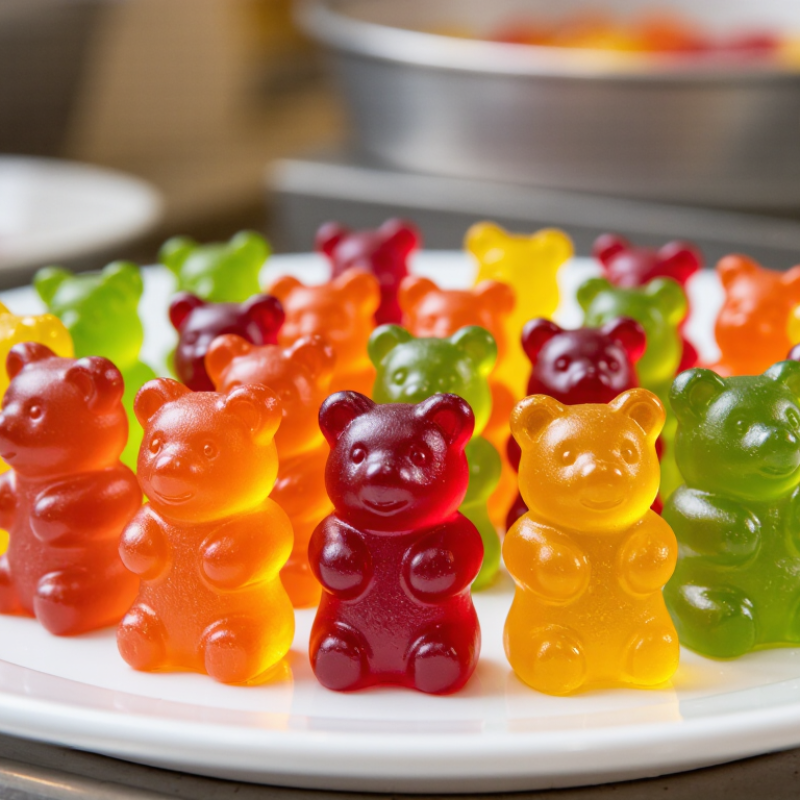
China Gummy Bear Supply: Global Market Growth and Buyer Demand Data
China’s gummy bear supply is expanding with global buyer demand. Grand View Research estimates the global gummy market reached about USD 19.1 billion in 2023. It projects a compound annual growth rate of roughly 10.9% from 2024 to 2030. This growth supports steady sourcing interest from distributors, retailers, and food-service buyers.
Classic gummy bears remain practical for large-volume purchasing. Their small size supports flexible packing, mixed-color assortments, and controlled portion sizes. Buyers commonly evaluate texture, flavor consistency, gelatin or pectin options, and shelf-life performance. China-based suppliers can support these needs through mold customization, batch production, and export-oriented quality systems. Reliable factories should provide ingredient specifications, allergen statements, laboratory results, and traceable batch records.
Demand is growing, but forecasts are not guarantees. Fortune Business Insights values the global gummy market at approximately USD 19.57 billion in 2023 and expects continued expansion through 2032. Different reports use different product definitions, so buyers should compare methods carefully. That detail is easy to miss. Freight costs, destination regulations, sugar preferences, and private-label packaging can also change final purchasing decisions. A practical sourcing review should include pilot samples, packaging tests, production lead times, and independent quality verification before confirming a large order.
China Top Classic Gummy Bears Supplier for Global Buyers - China Gummy Bear Supply: Global Market Growth and Buyer Demand Data
| Market / Indicator | Data Period | Reported Data | Buyer-Demand Signal | Relevance for Gummy Bear Supply |
|---|---|---|---|---|
| Global gummy confectionery market | 2023–2030 | Published market studies place the 2023 market at approximately US$18–20 billion and forecast strong double-digit growth through 2030, depending on scope and methodology. | High-growth category | Supports continued demand for standard gummy bears, private-label products, sugar-free formats, and functional jelly products. |
| United States | 2023 | Population: approximately 334.9 million. Internet-use rate: approximately 97% of the population. | Large, digitally mature market | Suitable for multipacks, resealable pouches, seasonal shapes, online retail, and transparent ingredient communication. |
| European Union | 2023 | Population: approximately 448.8 million. The EU applies harmonized rules for food information, allergens, nutrition declarations, and additives. | Large regional buyer base | Export-ready products require compliant labels, allergen declarations, permitted additives, traceability, and language adaptation. |
| United Kingdom | 2023 | Population: approximately 68.4 million. Internet-use rate: approximately 96% of the population. | Strong online purchasing potential | Favors compact shipping cartons, pouch formats, clear nutrition information, and products suitable for online grocery channels. |
| Canada | 2023 | Population: approximately 40.1 million. Internet-use rate: approximately 94% of the population. | Import-oriented market | Bilingual packaging, stable shelf life, and flexible case-pack options can improve suitability for national distribution. |
| Australia | 2023 | Population: approximately 26.6 million. Internet-use rate: approximately 97% of the population. | High digital reach with long-distance logistics | Moisture-resistant packaging, heat-stable formulations, and extended shelf life are important for international shipment. |
| Japan | 2023 | Population: approximately 124.5 million. Internet-use rate: approximately 86% of the population. | Mature, quality-sensitive market | Consistent texture, precise weight control, attractive small-pack formats, and detailed product specifications are important. |
| South Korea | 2023 | Population: approximately 51.7 million. Internet-use rate: approximately 98% of the population. | Highly connected consumer market | Supports fast-moving product launches, visually distinctive shapes, smaller portions, and digital-first retail promotion. |
| China | 2023 | Population: approximately 1.410 billion. Internet-use rate: approximately 76% of the population. | Large manufacturing and domestic-demand base | Production scale, export logistics, OEM flexibility, packaging customization, and multiple texture options support global buyer requirements. |
| HS 170490 trade category | 2023 | International trade databases classify non-cocoa sugar confectionery under HS 170490; the category includes gummy products but is broader than gummy bears alone. | Useful trade proxy | Importers should verify the exact HS classification, customs requirements, product composition, and destination-market labeling rules before ordering. |
Data notes
Population and internet-use figures are rounded 2023 indicators from the World Bank and United Nations population datasets. The global gummy-market figure is presented as a range because published market studies use different definitions, including or excluding functional gummies, supplements, and related jelly confectionery.
HS 170490 is a broad customs category and should be treated as a directional indicator rather than a gummy-bear-only market measurement. Buyer demand also varies by formulation, gelatin or pectin use, sugar content, packaging format, certification requirements, and destination-market regulations.
FAQS
Their small size supports mixed colors, flexible packing, and controlled portion sizes. They are easy to display and distribute.
Review texture, flavor consistency, gelatin or pectin options, shelf life, and production capacity. Ask for recent batch records.
Many factories support custom molds, colors, flavors, and private-label packaging. Confirm artwork details before production begins.
Request ingredient specifications, allergen statements, laboratory results, certificates of analysis, lot codes, and traceability records.
Start with pilot samples. Test texture, flavor, packaging strength, and storage performance before approving mass production.
Labels generally need ingredients, highlighted allergens, net quantity, nutrition information, date marking, and storage instructions.
No. Local language rules may apply. A natural translation can still miss an important legal detail.
Recheck every formula revision and packaging update. Keep fresh samples and use qualified local reviewers when needed.
Freight costs, sugar preferences, destination rules, packaging needs, lead times, and order volume can all change the result.
No. Reports use different product definitions and methods. Buyers should compare sources carefully and avoid treating forecasts as promises.
Conclusion
China’s Classic Gummy Bears industry is expanding as global buyers seek reliable supply, consistent quality, and flexible customization. Manufacturers typically develop gummy bears at approximately 75–80° Brix, using 200–250 Bloom gelatin to achieve a balanced texture, stable shape, and appealing chewiness. The production workflow generally includes ingredient preparation, depositing into molds, controlled drying, and moisture management to support product consistency during storage and transport.
Professional suppliers strengthen buyer confidence through structured quality assurance systems, including HACCP-based controls, ISO 22000:2018 food safety practices, and routine testing against applicable microbial limits. For international distribution, products should also be prepared according to destination-market requirements, such as FDA 21 CFR provisions, EU Regulation 1169/2011, and relevant rules for ingredient declarations, allergen information, nutrition labeling, and packaging. By combining dependable production processes, documented quality controls, and careful compliance management, Chinese suppliers can support global buyers with safe, consistent, and market-ready Classic Gummy Bears.