Confectionery Insights & News
Industry trends, private label manufacturing guides, and export knowledge from our Lahore workshop.
How to Choose the Best White Chocolate Bars?
Table of Contents
- Start with the FDA Standard: At Least 20% Cocoa Butter
- Check for 14% Milk Solids and 3.5% Milkfat Minimums
- Compare Sweetener Levels Against the FDA’s 55% Maximum
- Inspect Ingredients, Freshness, Storage, and Signs of Fat Bloom
- Choose Bar Texture and Format for Snacking, Baking, or Pairing
- FAQS
- Conclusion
- Related Posts
Choosing the best White Chocolate Bars starts with understanding what white chocolate is—and what it is not. Food science writer Harold McGee’s work explains the key distinction: white chocolate contains cocoa butter but no cocoa solids. That matters because cocoa butter gives each bar its creamy texture, while milk, sugar, and added flavors shape its sweetness and aroma. A good label can tell you more than a glossy wrapper.
Look for cocoa butter near the top of the ingredient list, then check the balance of milk and sugar. Vanilla should feel warm, not overpowering. Some bars melt into a smooth, buttery finish; others leave a waxy coating or an overly sweet aftertaste. Small details count. A clean snap is useful, though it cannot prove quality on its own. Taste a square at room temperature, and notice how its flavor develops as it melts.
This guide will compare ingredients, texture, sweetness, flavor, and value to help you choose White Chocolate Bars for snacking, baking, or gifting. It will also explain why price and packaging can mislead. I have found that personal preference complicates any “best” list: a bar loved in coffee may taste too sweet on its own. That is worth admitting. Read the label, try a small piece, and decide which qualities matter most to you.
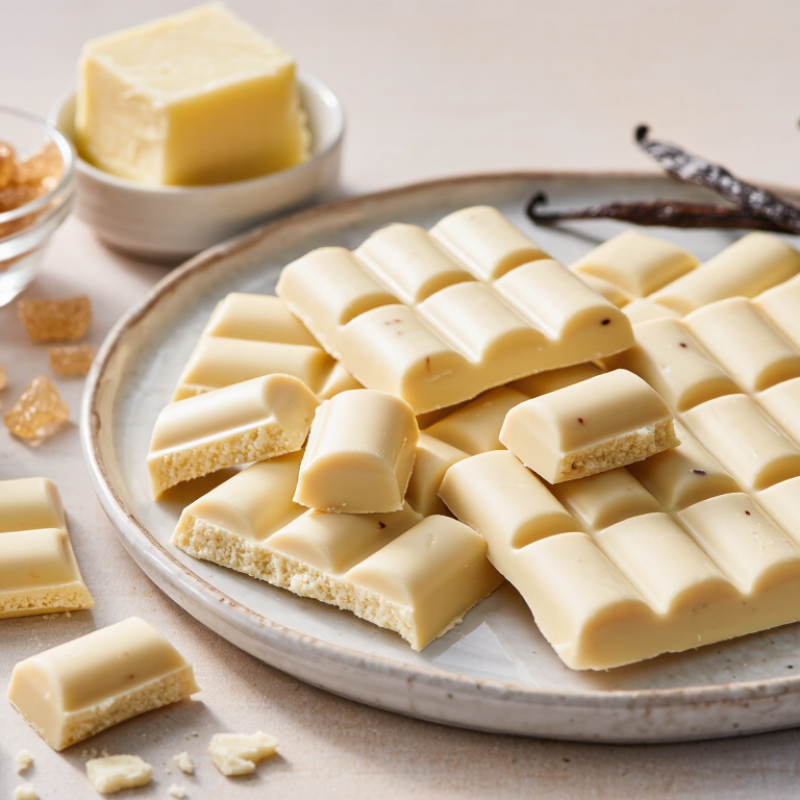
Start with the FDA Standard: At Least 20% Cocoa Butter
A dependable white chocolate bar starts with its cocoa butter content. Under the U.S. FDA standard of identity, 21 CFR 163.124, it must contain at least 20% cocoa butter. It also needs at least 14% total milk solids and 3.5% milkfat; nutritive carbohydrate sweeteners cannot exceed 55%. That is a legal baseline, not a flavor guarantee.
USDA FoodData Central’s generic white-chocolate entry lists roughly 32 g total fat and 59 g sugars per 100 g. These figures describe a generic food, not every bar, and total fat is not the same as cocoa butter. Still, they show why ingredient order matters: look for cocoa butter, not just “vegetable fat.” A bar can meet the minimum yet taste waxy or overly sweet. The threshold is a floor, not a promise of silkiness.
Tips: Check the ingredient list and break off a small piece. A good bar should soften smoothly on your tongue, with milky sweetness and no greasy coating. Compare two bars side by side; tasting notes can be surprisingly inconsistent. FDA standard: 21 CFR 163.124. USDA data: FoodData Central, generic white chocolate entry.
How to Choose the Best White Chocolate Bars?
Start with the FDA standard: white chocolate must contain at least 20% cocoa butter.
Under the U.S. FDA standard (21 CFR 163.124), white chocolate must contain at least 20% cacao fat (cocoa butter), 14% total milk solids, and 3.5% milkfat; nutritive carbohydrate sweeteners must not exceed 55%. These are regulatory limits, not typical product measurements.
Check for 14% Milk Solids and 3.5% Milkfat Minimums
When choosing white chocolate bars, check the milk-solids and milkfat figures, not just the creamy color or sweet aroma. The U.S. FDA standard of identity requires at least 14% total milk solids and 3.5% milkfat in white chocolate (21 CFR § 163.124). Codex Alimentarius sets the same minimums in its Standard for Chocolate and Chocolate Products, CXS 87-1981. Those numbers matter.
Milk solids include milk components beyond fat, such as proteins and lactose. Milkfat contributes richness and helps create a smooth, melting texture. A bar meeting both minimums has a clearer quality benchmark than one described only as “creamy.” Look closely. Ingredient lists may not state percentages, so check the product specification or ask the seller when details are missing.
I would treat the minimums as a starting point, not a promise of excellent flavor. Two bars can meet them and still taste quite different. Notice whether the bar smells milky, snaps cleanly, and melts without a waxy coating. That last check is subjective. Labels can also be frustratingly vague, and I wouldn’t infer exact milk content from nutrition facts alone. Compare the stated composition with the FDA standard and Codex benchmark before deciding.
Compare Sweetener Levels Against the FDA’s 55% Maximum
When choosing white chocolate bars, treat the FDA’s 55% figure as a ceiling, not a quality score. Under 21 CFR 163.124, white chocolate may contain no more than 55% nutritive carbohydrate sweetener by weight. The standard also requires minimum amounts of cocoa butter and milk ingredients. A bar below the ceiling is not automatically less sweet; vanilla, milk solids, and serving size affect how it tastes. The FDA rule is the useful benchmark.
Check the ingredient list and Nutrition Facts together. Ingredients appear in descending order by weight, so sugar near the top signals a larger share, but the list does not reveal its exact percentage. USDA FoodData Central’s generic white-chocolate entry reports roughly 59 grams of total sugars per 100 grams. That figure includes sugars from ingredients such as milk, so it cannot be read as the FDA-defined sweetener percentage. Not quite. Compare bars using the same serving weight, then note whether sugar or another sweetener leads the ingredients. A smaller piece can still taste intensely sweet. I sometimes find labels less decisive than expected; tasting a small square alongside a less-sweet bar is a practical check, not a precise measurement. These sources describe standards and food composition, not a ranking of the best-tasting bars.
How to Choose the Best White Chocolate Bars? — Compare Sweetener Levels Against the FDA’s 55% Maximum
The FDA’s standard of identity for white chocolate limits the combined amount of nutritive carbohydrate sweeteners to 55% by weight of the finished product. The examples below are hypothetical formulation scenarios—not measurements of actual products or brands.
| Illustrative scenario | Sweetener by product weight | Difference from 55% limit | Assessment against the limit | What it means when comparing bars |
|---|---|---|---|---|
| Lower-sweetener example | 40% | 15 percentage points below | Below limit | Contains less added sweetener by weight than the maximum allowed under the standard. |
| Moderate-sweetener example | 48% | 7 percentage points below | Below limit | Still below the regulatory ceiling; the percentage alone does not determine perceived sweetness. |
| At-the-limit example | 55% | At the limit | At limit | Matches the maximum sweetener proportion permitted by the white-chocolate standard. |
| Above-limit example | 57% | 2 percentage points above | Exceeds limit | Would exceed the standard’s maximum if the figure represents qualifying sweeteners by finished-product weight. |
How to use this comparison: The 55% figure is a legal composition limit, not a recommended sweetness level. Nutrition Facts “total sugars” cannot by itself establish a bar’s sweetener percentage by product weight. The FDA standard also specifies minimum amounts of cocoa butter, milk solids, and milkfat. See 21 CFR § 163.124, White chocolate.
Inspect Ingredients, Freshness, Storage, and Signs of Fat Bloom
A good white chocolate bar should list cocoa butter, milk solids, and sugar clearly. Check that cocoa butter appears among the main ingredients; vegetable fats can change the texture and flavor. The International Cocoa Organization’s May 2024 market report estimated a 439,000-tonne cocoa deficit for 2023/24. That figure reflects supply pressure, not bar quality, but it is useful context when comparing ingredient sourcing. Look closely. A clean, creamy aroma is reassuring; stale, waxy, or rancid notes are not.
Freshness depends on more than the printed date. Choose sealed packaging without tears, greasy patches, or evidence of heat exposure. Store the bar in a cool, dry place, away from sunlight and strong-smelling foods. National Confectioners Association guidance gives a storage range of about 16–21°C and humidity below 50%. A cupboard may work, but kitchens near ovens often run too warm. I would not treat a slightly dull surface as automatic proof of spoilage.
Fat bloom appears as pale streaks or a powdery film when cocoa butter separates and recrystallizes, often after temperature changes. It can make chocolate look unappealing, though it does not by itself establish that the bar is unsafe. Let chilled chocolate return to room temperature while still wrapped; condensation can mark the surface. A bar that smells off or tastes sharply stale deserves more caution than one with mild bloom. Check the ingredients and storage history, too.
Choose Bar Texture and Format for Snacking, Baking, or Pairing
Texture
Texture is a practical place to start when choosing a white chocolate bar. A firm, smooth bar snaps cleanly and is easy to portion for a snack. A softer bar may feel creamier, but warmth can make it smudge quickly in your hand. Check the surface for an even sheen and avoid bars with visible streaks or a chalky bloom. Bloom does not always mean spoilage, but it can signal changes in storage or texture. That matters.
For Baking
For baking, choose a bar that melts smoothly and chop it into similarly sized pieces. Small, even pieces melt more predictably than large chunks. White chocolate can scorch, so use gentle heat and stir often. Baking chips may hold their shape better, which is useful in cookies, but they may not melt like a chopped bar. Read the ingredient list, too: cocoa butter is a useful clue when you want a rich, fluid melt. I still sometimes choose a bar by appearance, then regret it when the pieces melt unevenly.
Pairing & Enjoyment
For pairing, consider sweetness and texture together. A creamy bar can balance tart berries, while a crisp snap works nicely beside toasted nuts or strong coffee. For everyday snacking, a thin bar breaks easily; thicker squares feel more substantial. Keep it simple. Taste a small piece at room temperature, since cold can mute its aroma. Not always. Personal preference matters, and the neatest-looking bar may not be the one you enjoy most.
FAQS
The U.S. standard requires at least 20% cocoa butter. That is a baseline, not a promise of a smooth texture.
Look for at least 14% total milk solids and 3.5% milkfat. Labels may not show percentages, so check the product specification if available.
No. Total fat includes fats from different ingredients. A generic entry lists about 32 grams of total fat per 100 grams, but that does not reveal cocoa butter levels.
Ingredient order helps show what the bar contains most of. Other vegetable fats can affect its texture and flavor. Labels can still be vague.
Break off a small piece and let it soften on your tongue. It should melt smoothly, without a greasy coating. Taste can be subjective.
A clean, creamy aroma is reassuring. Avoid bars with torn packaging, greasy patches, or stale, waxy, or rancid smells. Dates alone tell only part of the story.
Keep it sealed in a cool, dry place away from sunlight and strong-smelling foods. A suggested range is 16–21°C, with humidity below 50%. Kitchens near ovens may be too warm.
Not necessarily. Fat bloom can form after temperature changes and may look like pale streaks or powder. Mild bloom alone does not establish spoilage; an off smell or sharply stale taste deserves more caution.
Conclusion
Choosing the best White Chocolate Bars starts with checking whether they meet key composition standards: at least 20% cocoa butter, 14% milk solids, and 3.5% milkfat. Compare the sweetener content with the FDA’s 55% maximum, and read the ingredient list to understand what contributes to the bar’s flavor and texture. Freshness matters too, so look for intact packaging and store bars in a cool, dry place. A pale, powdery surface may indicate fat bloom; while it can affect appearance and texture, it does not necessarily mean the bar is spoiled.
The right bar also depends on how you plan to enjoy it. A smooth, firm bar may be ideal for snacking or pairing with fruit, nuts, or coffee, while a bar that melts evenly can be more convenient for baking. Consider the format and texture alongside the ingredients and quality indicators to find a bar that suits your taste and intended use.

Blog Tags: