Confectionery Insights & News
Industry trends, private label manufacturing guides, and export knowledge from our Lahore workshop.
How to Buy Pick and Mix Sweets Wholesale?
Table of Contents
Buying Pick And Mix Sweets wholesale can look simple, but the details decide whether your stock sells well. A colourful display may attract attention, yet freshness, pricing, and reliable supply matter more.
This guide explains how to choose wholesale sweets with confidence. It covers supplier checks, product quality, packaging, minimum order quantities, and delivery planning. Experienced buyers often request samples before placing larger orders. A sample reveals texture, flavour, colour, and packaging quality. It can also expose problems that photographs hide.
Check whether the supplier provides clear ingredient lists, allergen information, nutritional details, and suitable product dates. These details support responsible retailing and help protect customers. Requirements may differ between countries, so confirm the rules applying to your business location. Do not rely on vague promises.
Compare prices carefully. A low unit cost may become expensive after shipping, storage, or unsold stock. Calculate the cost per kilogram and estimate realistic weekly sales. Mixed sweets also need suitable containers, scoops, and dry storage. Humidity can make chewy sweets sticky and ruin an attractive display.
Supplier reputation deserves attention. Look for trading history, transparent contact details, consistent reviews, and responsive communication. Ask how orders are packed and what happens when items arrive damaged. Written answers are useful evidence.
I have seen buyers focus too heavily on bright packaging. That can be a costly mistake. Customer preferences change, and some popular flavours may remain unsold. Begin with a measured order, record sales, and adjust the selection gradually. It is not perfect, but it is safer.
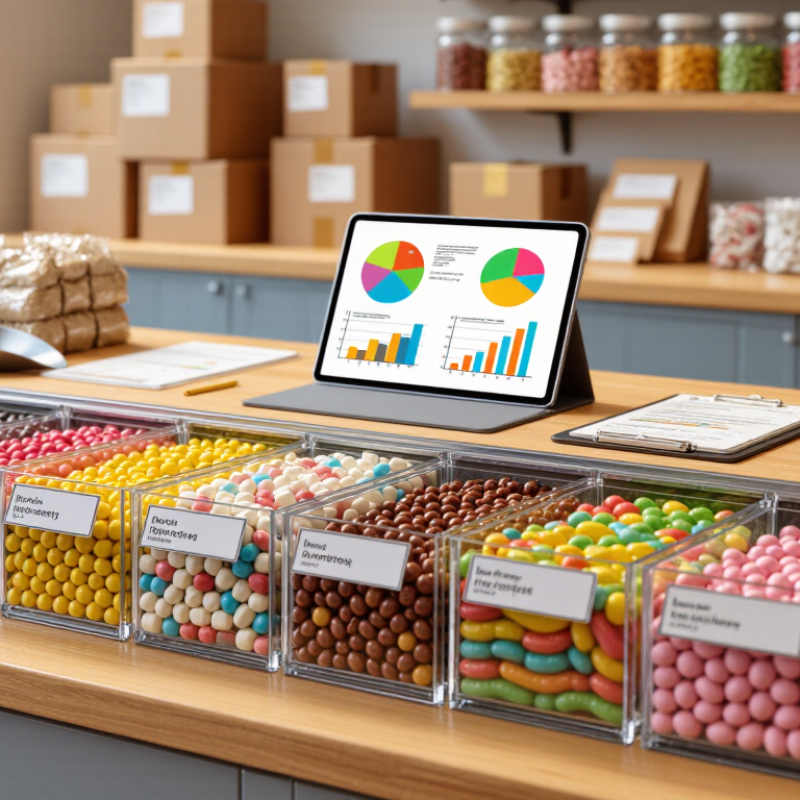
What Wholesale Pick and Mix Sweets Include
Wholesale pick and mix sweets usually include a broad, loose assortment rather than one fixed recipe. Typical cartons contain gummy bears, jelly beans, foam sweets, sour shapes, fruit chews, hard candies, liquorice pieces, and sugar-free options. Chocolate-coated items may be included, but they need careful temperature control during transport.
The National Confectioners Association reported approximately $48 billion in U.S. confectionery sales in 2023. That scale reflects strong demand for variety and convenient treats. However, wholesale buyers should not treat every assortment as interchangeable. Check each product’s ingredient list, allergen statement, net weight, country of origin, and best-before date.
Small details matter.
A reliable wholesale case should show batch identification and clear storage instructions. Ask whether the sweets arrive in food-safe inner bags, resealable tubs, or display-ready cartons. These formats affect hygiene, labour, and customer appeal. Mixed cartons often include 5–15 varieties, although the exact ratio depends on the supplier and sales channel.
For a pick and mix counter, balance textures and colours. Combine soft, chewy, crunchy, sour, and mild flavours. Too many sour sweets can discourage repeat purchases. I have found that visual variety attracts attention, but this assumption still needs testing against actual sales data. Review weekly movement by flavour, pack size, and waste. The 2024 State of Treating report also highlights the continuing importance of permissible indulgence, yet “better-for-you” choices remain difficult to define. Reduced sugar does not automatically mean lower calories or better nutrition. Read the specification carefully.
How to Define Your Product Range and Business Needs
Before buying pick and mix sweets wholesale, define the customer and selling occasion. A cinema counter needs fast-moving, colourful pieces. A gift shop may need premium shapes and smaller bags. Grand View Research estimates the global confectionery market will grow at about 4.7% annually from 2024 to 2030. Growth helps, but it does not excuse unfocused purchasing.
Build a range around measurable needs. Start with 20 to 30 core products, then add seasonal or experimental lines. Include different textures, colours, sizes, and sugar-free options where demand supports them. Track expected weekly sales, gross margin, minimum order quantities, shelf life, storage space, and replenishment time. IMARC Group valued the global candy market at approximately USD 232.7 billion in 2023, although estimates vary by category definition. That difference deserves attention.
Your wholesale plan should also reflect daily handling. Choose containers that keep sweets dry and easy to refill. Record allergens, ingredients, batch details, and best-before dates. Local labelling rules still apply. Test one mixed selection for four weeks before committing to large cartons. My practical mistake would be choosing too much variety too early. More choice can create dead stock, confusing displays, and weaker cash flow. Keep the evidence visible. A simple sales sheet often reveals that three colours sell, while ten barely move.
Where to Find Reliable Wholesale Sweet Suppliers
How to Buy Pick and Mix Sweets Wholesale?
Reliable wholesale sweet suppliers should offer more than attractive prices. They should provide consistent stock, clear documentation, and responsive communication. The 2024 Global Confectionery Market report by Grand View Research valued the market at over USD 250 billion, showing strong demand but also intense supplier competition. This makes verification essential.
Request current product sheets, ingredient lists, allergen statements, and batch information before ordering. Check whether sweets arrive in sealed food-grade packaging. Ask for samples, minimum order quantities, delivery windows, and replacement terms. A dependable supplier should explain storage conditions clearly. Look for traceability from delivery cartons to production batches. I would also compare three written quotations, not just online prices. A cheap offer can hide short dates or high freight costs. I have learned that “best value” is rarely the lowest number. My judgement can still be wrong, especially when seasonal demand changes.
Tips: Start with a small trial order. Inspect texture, colour, packaging, and delivery accuracy. Keep photographs and invoices for your records. Suppliers with recognised food-safety certification, such as an audited HACCP-based system or ISO 22000 certification, deserve closer attention. The ISO Survey 2023 recorded millions of ISO 22000 food-safety certificates worldwide, although certification alone does not guarantee perfect service. Review recent trade references and test how quickly the supplier answers difficult questions. Good communication matters when a popular flavour suddenly sells out.
How to Buy Pick and Mix Sweets Wholesale
Example wholesale order plan for comparing product mix, volume and estimated purchasing cost
This illustrative 1,000-unit order allocates the largest share to pick and mix sweets and gummies, while keeping several complementary categories in stock. When screening wholesale suppliers, compare equivalent pack sizes, minimum order quantities, shelf life, delivery terms and food-safety documentation before placing an order.
How to Compare Prices, Quality, Packaging, and Minimum Orders
Buying pick and mix sweets wholesale requires more than finding the lowest carton price. Ask each supplier for a clear price sheet showing cost per kilogram, carton quantity, delivery charges, and taxes. A low unit price may become expensive after freight or repacking. Compare identical products, not similar-looking selections. Request samples before placing a large order. Taste, texture, colour, and freshness can vary between batches.
Quality should be checked through ingredient lists, allergen information, production dates, shelf life, and storage instructions. Reliable suppliers should provide consistent documentation and answer questions directly. Packaging also matters.
Examine whether inner bags are sealed tightly, cartons resist crushing, and labels show product details clearly. Moisture can turn soft sweets sticky during transport. Transparent packaging may improve display, but it can reduce protection from light. Small details matter.
Minimum order quantities deserve careful attention. Some suppliers require one full carton per flavour, while others allow mixed cartons. Mixed orders reduce risk for shops testing demand, but they may carry higher prices. Ask about sample orders, repeat-order quantities, lead times, and damaged-goods procedures. Keep written quotations for comparison. I would not judge a supplier from one attractive sample alone. That approach can mislead you. A better check is to compare a second batch, inspect delivery condition, and calculate the real cost per saleable kilogram. Expect a few imperfect assumptions. Demand is rarely predictable, especially for unfamiliar flavours.
How to Place, Receive, and Manage a Wholesale Sweet Order
Buying pick and mix sweets wholesale is less about filling a large carton and more about controlling each step. Before placing an order, confirm the product list, case quantities, flavour balance, packaging format, shelf life, and storage instructions with the wholesaler. Request a written quotation showing unit prices, delivery charges, taxes, lead time, and payment terms. This prevents a cheap-looking order from becoming expensive later. Ask for current allergen information and ingredient specifications, especially when sweets will be sold loose. Keep records. A simple spreadsheet should include product codes, quantities, agreed prices, and the person who approved the purchase. I once overlooked a minimum case quantity, leaving slow-moving stock on the shelf. That mistake changed how I plan mixed orders.
When the shipment arrives, inspect it before signing for delivery. Check carton seals, product names, quantities, visible damage, batch references, and best-before dates against the delivery note. Photograph crushed boxes or missing items immediately, then report discrepancies through the agreed channel. Do not mix new stock with older stock until counting is complete. Store sweets in clean, dry, cool conditions, away from sunlight, moisture, strong odours, and direct floor contact. Use first-expire, first-out rotation, even if the shelves look tidy. Opened cartons need sealed food-grade containers and clear labels. Track daily sales and stock loss. A small variance may reveal damaged packaging, inaccurate scooping, or a counting error. I still review forecasts monthly because customer preferences change, and last season’s flavour mix is not always reliable.
How to Buy Pick and Mix Sweets Wholesale? - How to Place, Receive, and Manage a Wholesale Sweet Order
| Order Stage | Data Dimension | Wholesale Planning Value | Recommended Action | Acceptance Check |
|---|---|---|---|---|
| 1. Define the Assortment | Number of sweet varieties | 8–15 varieties for a balanced initial range | Combine gummy, foam, hard, sour, and liquorice-style products where suitable. | Each variety has a product specification, allergen statement, and case or kilogram price. |
| 2. Set the Order Quantity | Opening quantity per variety | 5 kg per variety in a trial order | For 10 varieties, plan for approximately 50 kg of mixed stock. | The requested quantity meets the supplier’s minimum order quantity for each line. |
| 3. Calculate Pack Requirements | Retail pack size | 100 g packs from 5 kg of bulk product | 5 kg ÷ 0.1 kg produces approximately 50 retail packs before handling loss. | Confirm whether the product is sold by net weight, piece count, carton, or case. |
| 4. Review Pricing | Landed cost per 100 g pack | Product cost + packaging + freight + applicable taxes | Calculate the complete cost before setting a selling price or margin target. | The invoice, freight charge, tax treatment, and payment terms match the quotation. |
| 5. Confirm Shelf Life | Remaining shelf life at delivery | Preferably at least 75% of the stated shelf life remaining | Request the production date, best-before date, and batch or lot code before dispatch. | The received dates satisfy the agreed minimum remaining shelf-life requirement. |
| 6. Check Storage Conditions | Recommended storage environment | Cool, dry, clean, sealed, and away from direct sunlight | Use food-grade containers and maintain the storage temperature specified on the product label. | No water damage, pest evidence, unusual odour, melting, or cross-contact risk is present. |
| 7. Place the Order | Purchase order information | Product code, description, quantity, unit price, delivery address, and requested date | Send one written order document and request written confirmation. | The order confirmation agrees with the purchase order on quantity, price, delivery, and payment terms. |
| 8. Plan Delivery | Lead time and delivery window | Allow 5–10 working days unless the supplier confirms another schedule | Reserve receiving space and arrange staff to inspect the shipment on arrival. | The carrier delivers to the correct address with the expected number of cartons or containers. |
| 9. Inspect the Shipment | Quantity and condition variance | Target: 0 missing or damaged units | Count cartons, weigh bulk containers where applicable, and photograph visible damage. | Received quantity and condition are recorded against the delivery note before signing. |
| 10. Verify Food Information | Allergen and ingredient documentation | Current ingredient list, allergen declaration, and handling guidance for every product | Keep documentation together with the relevant batch or lot records. | Labels and documents are legible, current, and consistent with the goods received. |
| 11. Put Stock Away | Inventory rotation method | FEFO: first expiry, first out | Place products with the earliest best-before dates at the front of the storage area. | Every container is marked with product name, batch or lot code, received date, and expiry date. |
| 12. Monitor Reordering | Reorder point | Average weekly sales × lead time in weeks + safety stock | Example: 20 packs per week × 2 weeks + 20 packs safety stock = reorder at 60 packs. | Update the calculation using actual sales, seasonal demand, and confirmed supplier lead time. |
Planning values are general wholesale guidelines. Confirm minimum quantities, prices, shelf life, allergen information, storage requirements, taxes, and delivery terms with the selected supplier before placing an order.
FAQS
Assortments often contain gummy bears, jelly beans, foam sweets, sour shapes, fruit chews, and hard candies. Liquorice and sugar-free choices may also appear. Chocolate-coated sweets need careful temperature control.
Many mixed cartons include five to fifteen varieties. The exact balance depends on the supplier and sales channel. Check the carton contents before ordering.
Request product sheets, ingredient lists, allergen statements, batch details, net weight, and country of origin. Also check best-before dates and storage instructions. Missing paperwork is a warning sign.
Compare the cost per kilogram, carton quantity, delivery charges, taxes, and repacking costs. A cheap carton may become expensive after freight. Calculate the real cost per saleable kilogram.
Check for sealed food-grade inner bags, strong cartons, clear labels, and suitable storage protection. Moisture can make soft sweets sticky. Light may affect transparent packaging.
Start with a small trial order whenever possible. Inspect texture, colour, freshness, packaging, and delivery accuracy. Keep photographs and invoices. One sample can mislead you.
Balance soft, chewy, crunchy, sour, and mild flavours. Use different colours to create a lively display. Too many sour choices may reduce repeat purchases. That assumption still needs sales data.
Some suppliers require a full carton per flavour. Others allow mixed cartons with several flavours. Mixed orders reduce testing risk but may cost more. Ask about repeat-order quantities and lead times.
Check stock consistency, traceability, food-safety documentation, communication, and damaged-goods procedures. Ask for recent trade references and test response times. Certification helps, but it is not a perfect guarantee.
No. Reduced sugar does not automatically mean fewer calories or better nutrition. Read the full specification and allergen information. “Better” can be unclear.
Conclusion
Buying Pick And Mix Sweets wholesale starts with understanding the products available, including assorted gummies, jellies, chocolates, hard candies, and other popular choices. Before contacting suppliers, define your product range, target customers, preferred flavours, dietary requirements, expected sales volume, and available storage space. This helps you choose products that suit your business rather than ordering an unsuitable selection.
Next, research reliable wholesale sweet suppliers and compare their product quality, pricing, packaging options, shelf life, minimum order quantities, and delivery terms. Request clear product information and samples where possible, then calculate the total cost before placing an order. When your sweets arrive, check the quantities, packaging condition, product dates, and overall quality promptly. Keep accurate stock records, store the sweets in suitable conditions, and monitor customer demand so future wholesale orders can be adjusted efficiently.
Blog Tags: