Knowledge Center · Candy House

Confectionery Insights & News

Industry trends, private label manufacturing guides, and export knowledge from our Lahore workshop.

0%

Choosing the best Custom Candy Gift Boxes involves more than selecting attractive colors and popular sweets. The right box should match the occasion, recipient, budget, and expected presentation. A wedding favor may need delicate ribbons and individually wrapped candies. A corporate gift may require polished branding and consistent portion sizes. Small details matter.

Reliable suppliers usually provide clear product descriptions, material information, customization samples, and realistic delivery timelines. Check whether the packaging protects candy from moisture, crushing, and heat during transportation. Food-safe materials and accurate ingredient labels also deserve attention. These points support a safer and more trustworthy buying decision.

Appearance still creates the first impression. A sturdy drawer box, transparent window, or magnetic closure can make the gift feel memorable. However, beautiful packaging cannot fix stale candy or poor printing. Even experienced buyers can overlook storage conditions or minimum order requirements. I have found that sample approval helps, although it adds time and sometimes reveals unexpected color differences. No option is perfect.

This guide examines candy selection, box styles, personalization, pricing, and supplier reliability. It also considers practical concerns, including allergen communication, recyclable materials, and delivery performance. The best choice should look appealing, feel thoughtful, and arrive in excellent condition. A charming box is valuable, but a dependable experience matters more.
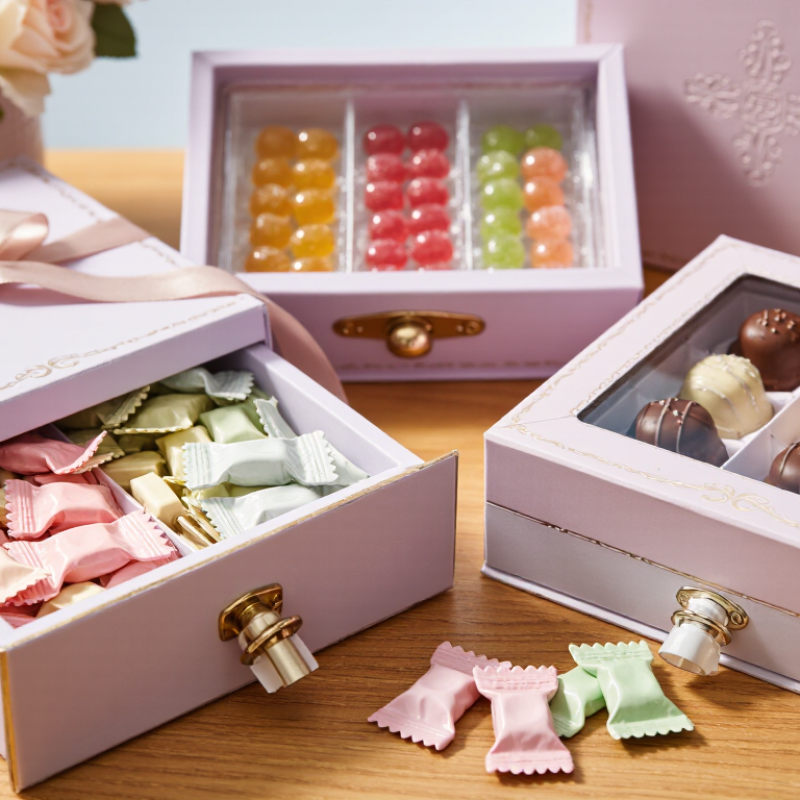
What Are the Best Custom Candy Gift Boxes?

What Defines a High-Quality Custom Candy Gift Box?

A high-quality custom candy gift box begins with safe, suitable materials. Food-grade inner bags or liners should protect candy from moisture, dust, and unwanted odors. The outer carton must feel firm, without crushed corners or weak seams. A beautiful design cannot repair poor protection.

Freshness matters. Candies should arrive with clear production and best-before information, plus accurate allergen details. Labels should match the destination market’s requirements. In practical packing tests, a box should survive stacking, movement, and a short drop. If pieces shift heavily inside, the design needs revision. That small failure is easy to overlook.

Customization should feel useful, not merely decorative. A well-planned box opens smoothly and holds each candy securely. Compartments can prevent chocolate marks, broken pieces, or mixed flavors.

Printing should remain sharp around folds, with consistent color and readable text. Sustainable paper is valuable when it still provides enough strength and hygiene. Some recycled materials may absorb moisture, so testing remains necessary. Details matter.

Reliable production also depends on documented ingredient checks, sample approval, and final inspection. Ask for a physical prototype before ordering large quantities. Digital previews can hide size, texture, and structural problems.

A premium gift box should look attractive on a table and remain dependable during delivery. Minor imperfections may reveal where the packaging process needs more care.

How to Select Candy Types and Flavor Combinations

Choosing candy for custom gift boxes starts with the recipient, not the package. Practical testing shows that mixed textures make a box feel more generous. Pair soft caramels with crisp fruit drops and smooth chocolate pieces. Balance sweetness with tart, salty, or lightly bitter notes. A box with only sugary flavors can become tiring after a few bites. Consider dietary needs and ingredient labels carefully. Clear allergen information builds trust and prevents awkward surprises. Seasonal heat also matters, since some fillings soften during delivery.

Tips: Build the flavor set around three contrasts: texture, intensity, and finish. Use two familiar candies, then add one unusual option. Test small batches before ordering hundreds. Too many floral flavors can feel confusing rather than elegant. That is an easy mistake to make.

For a polished combination, try berry candy, salted caramel, toasted nut pieces, and a mild citrus chew. These flavors create movement without overwhelming the palate. Keep very strong flavors apart, especially espresso or intense mint. Portion size matters too. Four or five small varieties often feel more curated than ten similar sweets. Ask a confectionery professional to review shelf life, temperature tolerance, and cross-contact risks. Their advice may reveal problems that attractive samples hide.

Maybe the best box is not the most dramatic one.
It is the one people finish.

Which Box Materials, Sizes, and Designs Work Best?

The best custom candy gift boxes balance protection, presentation, and practical handling. Food-safe coated paperboard suits most candies and supports sharp, colorful printing. Rigid board feels more luxurious, but it costs more and increases shipping weight. Recyclable kraft board offers a natural appearance, although its texture can soften bright colors. Moisture-resistant coatings help protect candies from humidity, especially during warm delivery periods.

Choose the box size according to the candy volume, not the empty space. A snug fit reduces movement and broken pieces. Small compartments can separate chocolate, gummies, and hard candy. For delicate treats, use food-safe inserts with smooth edges. A window helps customers view the assortment before opening. Magnetic closures look refined, while tuck flaps usually cost less. I have learned that an attractive prototype can still feel awkward when opened with one hand. That detail deserves testing.

Tips: Test three sizes with real candy before ordering. Check stacking strength, lid movement, and internal gaps. Use clear labels for flavors and allergens. Keep designs readable from a short distance. Avoid excessive decoration, because foil, ribbons, and thick inserts can raise costs quickly. One imperfect sample may reveal more than a polished digital mockup.

What Are the Best Custom Candy Gift Boxes? - Which Box Materials, Sizes, and Designs Work Best?

Box Style Recommended Material Typical Inner Size Approximate Capacity Best Candy Types Recommended Insert Design Features That Work Best Protection Level Environmental Considerations
Small Pillow Box 250–350 gsm folding paperboard 4 × 2.5 × 1.25 in
(10.2 × 6.4 × 3.2 cm)
Approximately 4–8 wrapped candies Hard candies, mints, small chocolate pieces, and individually wrapped sweets Usually not required; use a thin paper liner for loose pieces Short messages, single-color patterns, die-cut windows, and ribbon or sticker closures Light Paperboard is widely recyclable when it is clean and free from plastic windows or metallic laminates
Two-Piece Rigid Box 1.5–2.5 mm paperboard wrapped with printed paper 6 × 4 × 2 in
(15.2 × 10.2 × 5.1 cm)
Approximately 18–30 assorted candies Chocolate truffles, premium caramels, pralines, and mixed confectionery Paperboard dividers, molded pulp tray, or food-safe plastic insert Contrasting lid and base colors, foil-free textured paper, magnetic-free closure, and centered artwork High Durable and reusable; choose paper-based wraps and avoid unnecessary foam or laminated components
Drawer-Style Box 300–400 gsm paperboard sleeve with a rigid paperboard drawer 7 × 4 × 1.5 in
(17.8 × 10.2 × 3.8 cm)
Approximately 12–24 individually wrapped candies Chocolate bars, candy sticks, mints, and small gift assortments Paperboard compartments or a recyclable food-safe tray Pull ribbon, segmented artwork, inside-lid message, and a clear hierarchy between sleeve and drawer graphics Medium–High Can be reused as a keepsake box; paper components are easier to recycle when adhesives and coatings are minimized
Windowed Folding Carton 300–400 gsm paperboard with a cellulose or PET window 8 × 5 × 2 in
(20.3 × 12.7 × 5.1 cm)
Approximately 24–40 wrapped candies Colorful gummies, jelly candies, coated chocolates, and visually appealing assortments Paperboard divider, tray, or food-safe bag inside the carton Large display window, strong front-panel illustration, side nutrition information, and tamper-evident seal Medium Cellulose windows support a paper-forward design; plastic windows generally need to be separated before recycling
Hexagonal or Specialty-Shaped Box 350–450 gsm folding carton or laminated rigid paperboard Approx. 6 × 6 × 2.5 in
(15.2 × 15.2 × 6.4 cm)
Approximately 20–35 assorted candies Seasonal sweets, themed candy mixes, and celebration gifts Custom die-cut paperboard insert or fitted food-safe tray Use the shape as the main visual feature; keep text on broad panels and reserve narrow panels for small details Medium Custom shapes may create more paper waste during cutting; optimize the dieline to improve sheet utilization
Windowed Rigid Gift Box 1.5–2.5 mm rigid paperboard with a clear cellulose or PET window 10 × 7 × 2.5 in
(25.4 × 17.8 × 6.4 cm)
Approximately 35–60 candies Large premium assortments, filled chocolates, and corporate or event gifts Multi-compartment molded pulp tray or food-safe plastic tray Lift-off lid, presentation tray, restrained typography, premium texture, and a clear product-view area High Best for reuse; reduce material impact with a paper-based tray and a removable window component
Gable Box 300–400 gsm grease-resistant paperboard 5 × 3.5 × 5 in
(12.7 × 8.9 × 12.7 cm)
Approximately 20–35 small wrapped candies Party favors, gummies, loose wrapped sweets, and event giveaways Food-safe inner bag or paper liner; use a divider for mixed shapes Integrated handle, hanging tag, event date, and high-contrast graphics visible from both sides Medium Can use one primary paper structure; avoid plastic handles and excessive decorative attachments
Windowed Tin-Style Paper Box 400–500 gsm paperboard with a folding lid and internal paperboard support 8 × 5 × 2 in
(20.3 × 12.7 × 5.1 cm)
Approximately 25–45 individually wrapped candies Long-lasting gift assortments, seasonal candy, and collectible packaging Paperboard tray, paper cups, or a sealed inner pouch for loose candy Rounded-corner artwork, vintage-inspired labels, reusable closure, and a small transparent viewing panel Medium–High Reusable construction extends the package life; avoid metallized paper if simple paper recycling is a priority

Planning note: Capacity estimates are approximate and assume individually wrapped candies weighing about 10–15 g each. Actual capacity varies according to candy shape, wrapper size, insert design, headspace, and whether the box includes a protective inner bag.

How to Personalize a Candy Gift Box for Any Recipient?

Personalizing a candy gift box starts with knowing the recipient, not choosing the prettiest packaging. Consider their age, taste preferences, dietary needs, and the occasion. A child may enjoy bright colors and playful shapes, while a colleague may prefer dark chocolate, fruit chews, or gently flavored sweets. Small details matter.

Ask about allergies when possible. Check ingredient labels instead of relying on assumptions. If the recipient avoids gelatin, nuts, dairy, or artificial colors, select clearly labeled alternatives and keep them separated. Add a short ingredient card inside the box. It feels thoughtful and supports safer choices. For freshness, use sealed wrappers and choose candy with suitable shelf life.

Personal messages can make the box feel more intentional. Use a favorite color, a shared phrase, or a note tied to a real memory. You might arrange candies by flavor, then place the recipient’s favorite pieces in the center. I once focused too much on appearance and included flavors my recipient disliked. The box looked excellent, but the gift missed its purpose. That mistake still reminds me to ask better questions.

Packaging should also match the recipient’s lifestyle. A compact box suits travel, while a sturdy divided box works better for an office or family. Avoid excessive decoration when the person values simplicity. A handwritten note, careful selection, and accurate labeling often create a more meaningful custom candy gift box than expensive presentation.

What to Consider When Ordering Custom Candy Gift Boxes?

What Are the Best Custom Candy Gift Boxes?

When ordering custom candy gift boxes, start with the candy, not the artwork. Chocolate needs protection from heat, moisture, and grease. Gummies need tighter seals and stronger moisture barriers. Measure each piece, including wrappers and inserts. A box that looks premium may still crush easily during delivery. Packaging professionals often recommend testing filled samples through stacking, vibration, and temperature checks. This step feels slow, but skipping it can create costly waste.

Sustainability also deserves careful attention. McKinsey’s 2023 report, Sustainability in Packaging, found that 60–70% of consumers may pay more for sustainable packaging. However, “recyclable” claims require evidence. Ask suppliers about material composition, coatings, inks, and local recycling access. Smithers’ packaging research continues to identify material reduction and fiber-based formats as major industry directions. Still, thinner paper is not always better if damaged boxes increase replacements. That trade-off is easy to overlook.

Tips: Request a physical prototype before approving mass production. Confirm food-contact suitability, minimum order quantity, production time, and storage conditions. Compare the inner dimensions with actual candy samples. Review color proofs under natural light. Add tamper-evident features when distribution requires them. A small mistake in fit can make a beautiful package feel cheap.

What Are the Best Custom Candy Gift Boxes?

Use this 100-point planning model to compare custom candy gift box options. The recommended weights prioritize product protection, food-contact safety, customization, sustainability, and ordering convenience.

When ordering, confirm that the box is suitable for direct or indirect food contact, protects candy during shipping, matches your desired size and artwork, and meets your minimum-order and delivery requirements.

FAQS

How should I choose candy for a custom gift box?

Start with the recipient’s tastes, age, dietary needs, and the occasion. Mix soft caramels, crisp fruit drops, and smooth chocolate pieces. Add contrast. Balance sweet flavors with tart, salty, or lightly bitter notes. Test small batches before ordering large quantities.

How many candy varieties should a gift box include?

Four or five small varieties often feel more curated than ten similar sweets. Use two familiar candies and one unusual option. Too many strong flavors may confuse the palate. That mistake is easy to make.

Which flavor combinations create a balanced candy box?

Berry candy, salted caramel, toasted nuts, and mild citrus chews create useful contrast. Keep intense mint and espresso flavors apart. Strong flavors can dominate nearby pieces. Flavor movement matters.

How can I personalize a candy gift box for someone?

Consider favorite colors, familiar flavors, personal memories, and daily lifestyle. Place the recipient’s favorite candy in the center. Add a short handwritten message. Small details help. Avoid choosing only by appearance.

How can I handle allergies and dietary preferences?

Check ingredient labels carefully instead of relying on assumptions. Ask about allergies when possible. Look for suitable options without gelatin, nuts, dairy, or artificial colors. Keep different candy types separated. Include an ingredient card inside the box.

What packaging suits different candy types?

Chocolate needs protection from heat, moisture, and grease. Gummies need tight seals and stronger moisture barriers. Use a compact box for travel. Choose divided packaging for offices or families. Measure candy, wrappers, and inserts together.

How can I protect candy during delivery?

Consider seasonal heat because some fillings soften during transport. Use sealed wrappers and candy with suitable shelf life. Test filled packages for stacking, vibration, and temperature changes. A beautiful box can still fail. That part deserves more attention.

What should I check before ordering custom packaging?

Request a physical prototype before approving mass production. Confirm food-contact suitability, minimum order quantity, production time, and storage conditions. Compare inner dimensions with real candy samples. Review colors under natural light. Do not trust attractive samples alone.

How should I evaluate sustainable candy packaging?

Ask about material composition, coatings, inks, and local recycling access. Treat environmental claims carefully and request supporting evidence. Thinner paper may reduce material use but increase damaged boxes. That trade-off is easy to miss. Practical performance still matters.

Conclusion

Custom Candy Gift Boxes are a thoughtful and flexible way to present sweets for celebrations, business events, holidays, and personal milestones. A high-quality box should combine fresh, well-protected candy with attractive presentation and practical construction. Choosing the right candy types and flavor combinations is essential, whether the recipient prefers chocolate, fruit flavors, sour treats, or a balanced variety. The selection should also consider dietary preferences, ingredient transparency, and product freshness.

Box materials, sizes, and designs should match the occasion, quantity, and shipping requirements. Durable paperboard, recyclable materials, windowed designs, inserts, ribbons, and protective packaging can improve both appearance and usability. Personalization may include colors, messages, patterns, themed artwork, or recipient-specific candy selections. Before ordering, buyers should confirm minimum quantities, production timelines, customization options, packaging quality, shipping conditions, and the supplier’s ability to meet special requirements. With thoughtful planning, a custom candy gift box can deliver a memorable combination of flavor, creativity, and personal meaning.

Alexander

Alexander

Alexander is a professional marketing specialist dedicated to helping customers better understand the company’s products, services, and industry value. With extensive knowledge of product features, application scenarios, customer needs, and market trends, he creates clear, practical, and reliable......