Soft Marshmallows look simple: pale cubes, a powdery surface, and a springy bite. Their texture, however, comes from controlled aeration. Sugar syrup is whipped with gelatin or another setting agent, trapping countless tiny air bubbles. The mixture is then shaped and allowed to set. Small changes in temperature, whipping, or ingredient ratios can alter the finished chew. Even careful batches vary.
Industry context helps explain why this familiar confection deserves a closer look. The National Confectioners Association’s 2024 State of Treating report examines consumer attitudes and candy-eating occasions, though it does not isolate marshmallows. For a nutritional reference point, USDA FoodData Central lists plain marshmallows at about 318 calories per 100 grams. These sources answer different questions: one tracks the wider confectionery category; the other records food composition.
Food scientist Richard Hartel, co-author of Candy Bites: The Science of Sweets, provides a useful scientific lens through his published work on confectionery. In paraphrase, his work points to aeration and structure as central to understanding marshmallow texture; this is not presented as a verified verbatim quotation. That distinction matters. A trustworthy explanation should separate documented findings from convenient-sounding quotes. Here, we’ll look at what soft marshmallows are, how their ingredients create a stable foam, and which steps shape their final texture—from a glossy whipped mixture to a tender cube that yields under gentle pressure.
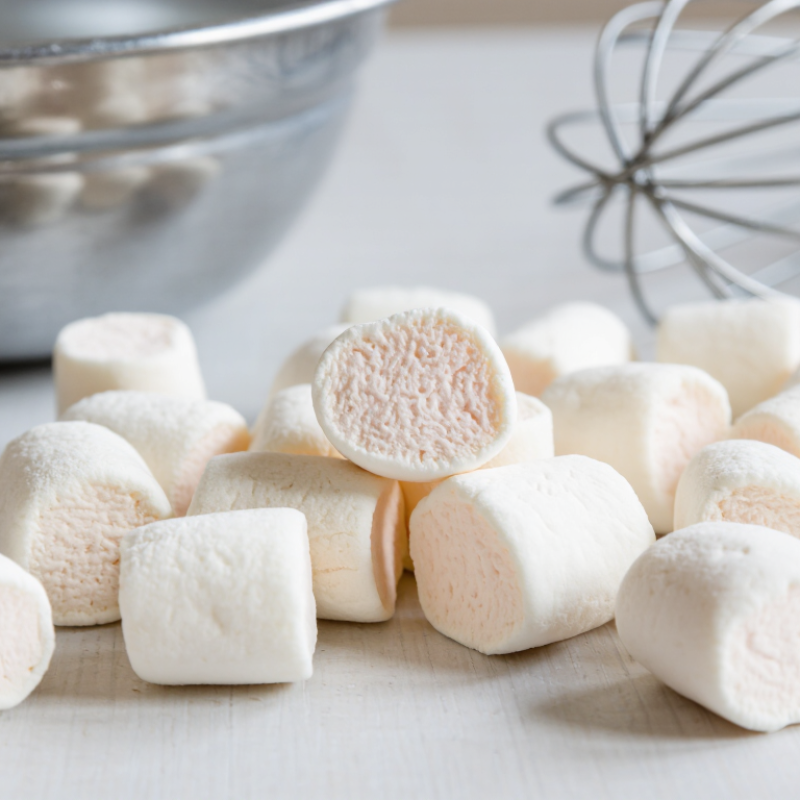
Soft marshmallows are aerated confections with a tender, springy bite rather than a firm, chewy one. Their texture begins with a simple structure: tiny air bubbles held inside a mixture of sugar syrup and gelatin. When the warm mixture is whipped, it expands and turns pale, while gelatin helps the bubbles hold their shape as it cools. That distinction is easy to miss.
The balance of air, moisture, and gelatin shapes the final feel. More air can make a marshmallow lighter, while a stronger gelatin network may make it firmer and more elastic. Sugar adds sweetness, but it also affects the mixture’s body and how it sets. Small differences matter. A batch whipped for less time may feel dense; one left uncovered too long can develop a dry surface. Humidity and storage conditions can change softness, too, so texture is not controlled by one ingredient alone. Even careful methods leave room for variation, which is worth remembering when comparing homemade batches. A soft marshmallow should yield gently under light pressure, then partly spring back without feeling rubbery.
Soft marshmallows get their tender, springy texture from a few carefully balanced ingredients. Gelatin forms a flexible structure that traps tiny air bubbles when the hot syrup is whipped. Sugar provides sweetness and body, while corn syrup helps limit grainy sugar crystals. Water dissolves the sugars and allows them to heat evenly. A little vanilla adds a warm aroma, though it is optional.
The mixture is usually heated until the syrup reaches a concentrated stage, then slowly beaten with softened gelatin. As it cools, the mixture thickens and holds its shape. Cornstarch or powdered sugar is often used to coat the finished pieces and reduce sticking. Small changes matter: too much gelatin can make marshmallows firm, while under-whipping may leave them dense. Home thermometers can also be slightly inaccurate, so texture may vary. That part can be frustrating.
Tips: Measure ingredients by weight when possible, and keep the bowl free of grease for better whipping. Let the marshmallows set before cutting; a lightly oiled knife makes cleaner edges. Store them in an airtight container, away from humidity. Vegan versions use alternatives such as agar, but their bite and setting behavior can differ noticeably.
Soft marshmallows begin with a simple pairing: sugar syrup and gelatin. Gelatin is hydrated in cool water before mixing, which helps it dissolve evenly later. Meanwhile, sugar and water are heated into a concentrated syrup. Temperature matters. A syrup that is too cool can leave the mixture sticky and weak; too hot, and the finished candy may feel firm. Exact targets vary with the recipe and equipment, so a thermometer is more reliable than judging bubbles alone.
The warm syrup is streamed into the softened gelatin while the mixture is whipped. Whipping traps air, turning a dense liquid into a pale, glossy foam. As it cools, gelatin forms a flexible network around the air bubbles, helping the marshmallow hold its shape while staying springy. Small lumps or a gritty finish can signal uneven hydration or undissolved sugar. USDA FoodData Central’s generic marshmallow entry reports about 81 grams of carbohydrate per 100 grams, including roughly 58 grams of sugars. That figure describes the finished food, not a recipe’s syrup concentration, but it shows how central sugar is to the mixture. A slightly imperfect batch can still reveal the process: watch how the foam thickens, then note whether it cuts cleanly after setting.
Soft marshmallows get their airy texture from whipped sugar syrup and gelatin. Gelatin is softened in cool water before warm syrup is added. The syrup should be hot enough to dissolve the sugar fully, but handling it requires care because it can cause serious burns. With a mixer running, pour it in slowly. Then whip until the mixture turns pale, thick, and glossy. Air bubbles make the candy light; gelatin helps those bubbles hold their shape as the mixture cools. Look for ribbons. If the foam is under-whipped, the finished marshmallows may feel sticky or dense. In practice, texture is often a better guide than a timer, since mixer strength and batch size can change the pace.
While the mixture is still pliable, spread it into a lightly oiled, starch-dusted pan, or pipe it into individual shapes. Work promptly: it firms as it cools, and the surface can become difficult to smooth. Leave it uncovered in a cool, dry place until the center feels springy and no longer clings heavily to a fingertip. This may take several hours, sometimes longer in humid conditions. Cut with a lightly oiled knife, then toss each piece in a fine coating of starch and powdered sugar to reduce sticking. The edges may look uneven, even with careful cutting; that small flaw rarely affects the soft interior.
How whipping, shaping, and setting create soft marshmallows
Marshmallows get their airy texture when gelatin and hot sugar syrup are whipped together. The times shown are approximate active preparation times and vary by recipe. After shaping, marshmallows need several hours to set; that resting time is not included in the chart.
Once the whipped mixture has set, producers release it from its starch bed and trim it into pillows or cut pieces. A light coating of powdered sugar and starch helps limit sticking, but too much leaves a dusty bite. Pieces need time to cool before packing; warm marshmallows can create condensation inside a sealed wrapper. Small detail. On the line, operators check that pieces feel springy and separate cleanly, not damp or tacky.
Packaging protects softness by slowing moisture exchange. Marshmallows can dry and toughen when exposed to air, while humid conditions may make their surfaces sticky. USDA FoodData Central lists generic marshmallows at about 318 calories and 81.3 grams of carbohydrate per 100 grams. That figure describes nutrition, not shelf life, but it underscores why keeping the product sealed matters. Store unopened packs in a cool, dry cupboard, away from sunlight and heat; after opening, close the bag tightly or use an airtight container. Refrigeration is usually unnecessary and may cause unwanted texture changes. One imperfect point: “cool and dry” is not a precise factory specification. Manufacturers validate their own packaging and storage conditions, so dates and instructions on the package should guide consumers.
| Stage or factor | What happens | Purpose or practical detail |
|---|---|---|
| What a soft marshmallow is | A light, aerated confection made from a sweetener mixture and a stabilizing ingredient such as gelatin. | Whipping incorporates many small air bubbles. The set structure holds those bubbles, giving marshmallows their soft, springy texture. |
| Setting | The whipped mixture is allowed to cool and firm in a starch-dusted mold or pan, or as an extruded rope. | Setting gives the aerated mixture enough structure to be released, cut, or handled without losing its shape. Time depends on the recipe, size, and process. |
| Release and starch removal | Molded pieces are released from their starch beds, and loose process starch is brushed or screened away. | Starch helps prevent sticking during forming. Removing excess starch leaves a cleaner surface before the final coating or packaging. |
| Cutting and shaping | A set slab may be cut into pieces; an extruded rope may be cut into individual marshmallows. | Cutting equipment and dimensions vary by product. Clean cuts help make pieces more uniform and easier to coat and pack. |
| Anti-stick coating | Pieces are commonly tossed or dusted with a mixture of powdered sugar and food-grade starch. | The dry coating reduces surface tack and helps keep marshmallows from sticking together. The coating blend varies by recipe and manufacturer. |
| Inspection | Finished pieces may be checked for size, appearance, foreign material, and package suitability. | Food producers use controls suited to their process to support consistent quality and food safety. |
| Packaging | Marshmallows are packed in clean, food-contact packaging that can be sealed to limit exposure to air and moisture. | A closed package helps preserve softness and reduce drying or unwanted moisture pickup. Follow the storage directions on the package. |
| Home storage | Keep marshmallows sealed in a cool, dry place away from heat and direct sunlight. | Close the package securely after opening. Refrigeration is generally unnecessary and can expose marshmallows to moisture or odors. |
| Quality changes over time | Air exposure can gradually make marshmallows drier or firmer; excess moisture can make their surfaces sticky. | Best-before dates and storage life depend on the product and packaging. Use the date and directions provided on the package. |
Gelatin traps tiny air bubbles, while sugar adds sweetness and body. Corn syrup helps limit grainy crystals. Water dissolves the sugars, and vanilla is optional.
It should look pale, thick, and glossy. Look for ribbons. Under-whipping can leave the marshmallows dense or sticky, though mixer strength changes the timing.
Too much gelatin can make them firm. A thermometer may also read slightly inaccurately, so the final texture can vary. A little frustrating.
Spread it in a lightly oiled, starch-dusted pan, or pipe individual shapes while it is still pliable. Leave it uncovered in a cool, dry place until springy. Humidity may extend the setting time.
Let the mixture set, then use a lightly oiled knife. Toss each piece in a thin coating of starch and powdered sugar. Uneven edges are common and rarely change the soft center.
Too much coating can leave a dusty bite. Humidity may make the surface sticky, while exposure to air can dry and toughen the pieces.
Seal the bag tightly or transfer them to an airtight container. Keep them in a cool, dry cupboard away from sunlight and heat. Refrigeration is usually unnecessary and may change the texture.
They may use alternatives such as agar, but their setting behavior and bite can differ noticeably. The difference may take some getting used to.
A typical reference lists about 318 calories and 81.3 grams of carbohydrate per 100 grams. That describes nutrition, not shelf life. Check package instructions for storage guidance.
Soft Marshmallows are soft, airy confections whose texture comes from a mixture of sugar, water, and gelatin. Sugar provides sweetness and structure, while gelatin helps the finished marshmallows hold their shape without becoming firm or brittle. The balance of these ingredients, along with the amount of air incorporated during preparation, gives them their familiar light, springy feel.
To make them, sugar and water are heated into a syrup, then combined with softened gelatin to create a smooth mixture. The mixture is whipped until it becomes pale, fluffy, and expanded with air. It is then poured or shaped and left to set. Once firm enough to handle, the marshmallow is cut into pieces and lightly coated to reduce stickiness. Stored in an airtight container in a cool, dry place, Soft Marshmallows can retain their tender texture and stay fresher for longer.