Knowledge Center · Candy House

Confectionery Insights & News

Industry trends, private label manufacturing guides, and export knowledge from our Lahore workshop.

0%

Sourcing Cocoa Dusted Truffles wholesale requires more than comparing carton prices. Buyers must examine cocoa origin, cocoa percentage, dusting consistency, filling stability, packaging, and delivery performance. A truffle may look luxurious under soft lighting, yet melt unevenly during a warm shipment. Small details matter.

The International Cocoa Organization’s May 2024 Quarterly Bulletin reported approximately 4.461 million tonnes of cocoa production and 4.855 million tonnes of grindings for 2023/24. That indicated a substantial supply deficit. CBI also identifies Europe as a major destination for cocoa and chocolate products, where buyers increasingly assess traceability, sustainability, and supplier transparency. These figures do not predict every wholesale price. They do explain why quotations can change quickly.

Michel Arrion, Executive Director of the International Cocoa Organization, described recent conditions as “exceptionally difficult for the entire cocoa value chain.” His warning deserves attention when evaluating Cocoa Dusted Truffles suppliers. A low price can hide inconsistent cocoa dusting, weak temperature control, or unclear sourcing records. Not every polished catalogue deserves trust.

This guide introduces a practical sourcing framework. It covers supplier verification, minimum order quantities, product sampling, private-label options, shelf life, certifications, and landed costs. It also considers an uncomfortable point: the cheapest truffle is rarely the cheapest decision. Buyers should request batch details, allergen information, production dates, and shipping tests before signing agreements. Reliable sourcing begins with evidence, not attractive photographs.

How to Source Cocoa Dusted Truffles Wholesale?

Define Cocoa-Dusted Truffles by Codex CXS 87-1981 and Cocoa-Solids Content

How to Source Cocoa Dusted Truffles Wholesale?

Codex CXS 87-1981 treats chocolate truffles as chocolate products, not merely round candies. Cocoa dusting alone does not define the product. The filling and chocolate portion must meet the relevant composition requirements. For chocolate truffles, check whether the recipe contains at least 25% total cocoa solids. Milk solids and milk fat may also apply when the product is described as a milk chocolate truffle. Always confirm the current Codex wording and local food rules before approving a label.

When sourcing wholesale, request a full ingredient statement, cocoa-solids calculation, product specification, and batch-based certificate of analysis. Ask whether the stated cocoa percentage covers the whole truffle or only its coating. This detail changes the commercial meaning. A dark center with a thin cocoa shell may look intense, yet contain less cocoa than expected. Review moisture, fat content, texture, allergen controls, and storage temperature. I would also inspect a retained sample after transport. Heat can soften the center and make the cocoa surface patchy. That result is easy to overlook during factory sampling.

Tips

Compare suppliers using the same cocoa-solids definition. Request laboratory support for unusual claims. Check whether “cocoa dusted” describes the finish only. If the paperwork feels unclear, pause the purchase. A cheaper truffle can create costly relabeling or quality disputes.

Screen Suppliers Using the 2023/24 ICCO Cocoa Production Baseline

How to Source Cocoa Dusted Truffles Wholesale?

The 2023/24 cocoa season exposed a fragile supply base. The ICCO Quarterly Bulletin of Cocoa Statistics, May 2024, estimated world cocoa production at about 4.461 million tonnes. It also reported a projected deficit near 439,000 tonnes. These figures should change how buyers screen truffle suppliers. A low quotation may reflect weaker cocoa inputs, delayed purchasing, or uncertain stock.

Ask each supplier for the cocoa origin, harvest period, cocoa percentage, and current lot availability. Compare these details with production data from the ICCO and the USDA Foreign Agricultural Service Cocoa Annual 2024.

Reliable suppliers should provide recent certificates of analysis, allergen declarations, moisture results, and shelf-life testing. Request a retained sample from the same batch. Samples can look excellent, while later production disappoints.

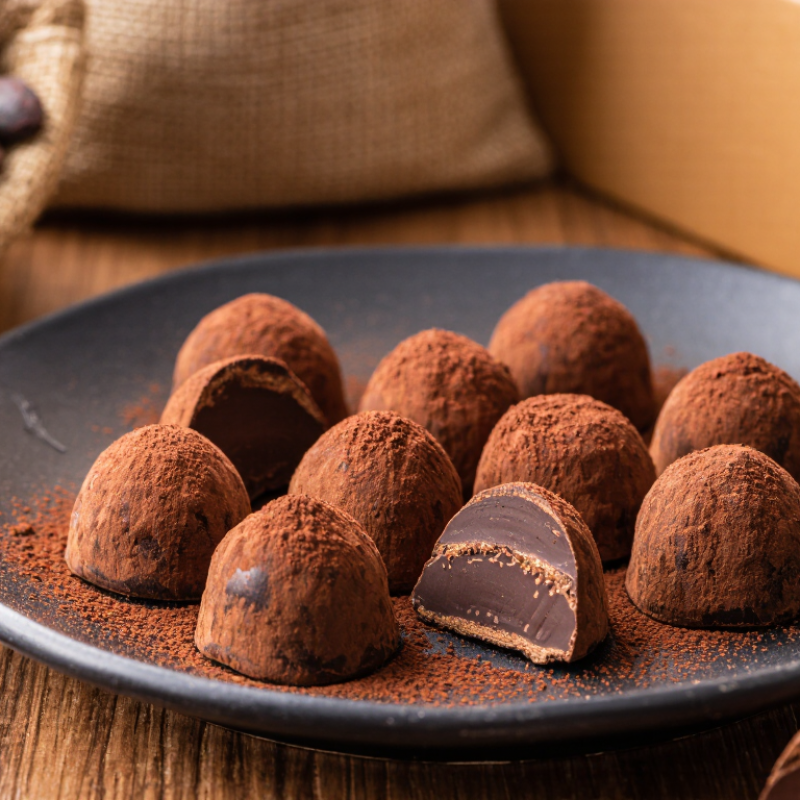
Check the truffle’s surface closely. Cocoa dusting should appear even, dry, and free from hard patches. Cut one piece. The center should remain smooth, not oily or gritty. Confirm carton weight, inner packaging, storage temperature, and delivery conditions. I would also test a small commercial batch before signing a larger contract. That step costs time. It can prevent costly surprises.

Do not rely on production totals alone. Regional crop variation, port delays, and inconsistent fermentation can still affect flavor.

One weakness in this method is timing: public cocoa statistics may trail actual market changes. Recheck supplier documents before every seasonal purchase.

Verify Cocoa Powder, Allergen, and Food-Safety Compliance to ISO 22000

Sourcing cocoa dusted truffles wholesale requires more than checking flavor and price. Verify the cocoa powder’s origin, processing method, lot number, and certificate of analysis. The document should show microbiological results, heavy-metal controls, and moisture limits. Ask whether the testing covers the exact production lot. Ask for records.

ISO 22000 certification can strengthen supplier confidence, but inspect its scope carefully. It should include the facility and product category producing the truffles. Confirm the certificate is current and issued by a recognized certification body. Review the supplier’s hazard analysis, sanitation controls, pest management, and traceability procedure. A certificate alone is not enough. Verify the audit date and corrective-action history.

Allergen control needs close attention because truffle fillings may contain milk, soy, nuts, gluten, or other regulated allergens. Request an allergen matrix, cleaning validation, and evidence of physical separation where needed. Ask how cocoa powder is protected from cross-contact during storage and dusting. Check the label against the destination market’s requirements. Keep sealed samples from each approved lot, including packaging and pallet details. This helps investigate a complaint quickly. One limitation deserves honesty: paperwork may look complete while shop-floor practice differs. A remote review cannot reveal every weak cleaning step. An on-site audit, or independent inspection, is safer for larger orders.

Compare Wholesale Costs Using MOQ, Shelf Life, and 0.5–2% Moisture Targets

When sourcing cocoa-dusted truffles wholesale, compare more than the quoted carton price. MOQ can reduce the unit cost, but excess inventory may expire before sale. I check projected monthly demand against the supplier’s minimum order. A low MOQ often supports fresher purchasing. A large MOQ needs stronger storage planning.

Shelf life should be verified from production date, not only from the delivery date. Ask for unopened and opened-pack guidance. I also request samples from different production batches.

Truffles with a longer shelf life may contain different fat, sugar, or packaging systems. That can affect texture and customer expectations. Storage temperature matters greatly.

Moisture requires careful checking. A target between 0.5% and 2% may support a firm coating and stable texture, but the ideal range depends on the recipe. Ask whether the supplier measures moisture by a validated laboratory method. Water activity should also be reviewed, because moisture percentage alone can be misleading. A product may meet the moisture target yet soften during humid transport.

I compare three landed-cost scenarios: small MOQ with frequent orders, medium MOQ with planned storage, and bulk MOQ with possible waste. Include testing, freight, insulated packaging, and damaged units. My less perfect assumption was treating shelf life as fixed. In practice, repeated temperature changes shortened the usable period. Supplier records, batch samples, and written specifications make the comparison more reliable.

Finalize Samples, Packaging, Incoterms, and Lot Traceability Before Ordering

How to Source Cocoa Dusted Truffles Wholesale?

Wholesale cocoa dusted truffles need more than a target price. They need a controlled pre-order decision. The ICCO 2023/24 Annual Report estimated a 439,000-tonne cocoa deficit. That shortage can affect couverture costs, lead times, and minimum order quantities.

Request samples from the intended recipe, not a convenient substitute. Check shell thickness, cocoa dust adhesion, filling stability, melt point, and texture after transport. Keep one sealed reference sample with its supplier lot code.

Packaging should show net weight, piece count, allergens, storage conditions, shelf life, and carton dimensions. Test inner trays for scuffing. Cocoa dust quickly exposes weak seals.

PMMI’s 2024 Global Packaging Trends report identifies recyclable formats and supply-chain resilience as major packaging priorities. Still, recyclable packaging may lose strength in humid conditions.

Test it physically. The attractive option is not always the practical one.

Write the Incoterm with a named place, such as FCA at the production site or DAP at the warehouse. Confirm who handles export clearance, insurance, import duties, and temperature risks.

Require a documented lot system linking cocoa, fillings, packaging, production dates, and finished cartons. Ask for certificates of analysis and a recall contact process.

I have seen buyers approve a beautiful sample, then receive softer truffles in bulk. It is an avoidable mistake, although not always.

Final approval should cover samples, packaging, Incoterms, and traceability together.

FAQS

What should buyers ask before sourcing cocoa-dusted truffles wholesale?

Ask for cocoa origin, harvest period, cocoa percentage, and current lot availability. Request details in writing.

Why can a very low quotation create concern?

It may reflect weaker cocoa inputs, delayed purchasing, or uncertain inventory.

What documents should a reliable supplier provide?

Request a certificate of analysis, allergen declaration, moisture results, and shelf-life testing.

How can buyers check cocoa powder quality?

Review its origin, processing method, lot number, microbiological results, heavy-metal controls, and moisture limits.

What should buyers inspect on the truffle’s surface?

The cocoa dusting should look even, dry, and free from hard patches.

Why is a retained sample important?

Ask for a sealed sample from the same batch planned for production.

What allergen controls should suppliers demonstrate?

Request an allergen matrix, cleaning validation, and evidence of separation where needed.

Is a food-safety certificate enough to approve a supplier?

No. Check its current status, facility scope, product category, audit date, and corrective-action history.

What packaging and delivery details should buyers confirm?

Confirm carton weight, inner packaging, storage temperature, and delivery conditions.

Should buyers rely only on public cocoa production figures?

No. Regional crop variation, port delays, and uneven fermentation can change flavor and availability.

Conclusion

Sourcing Cocoa Dusted Truffles wholesale starts with defining the product clearly. Use Codex CXS 87-1981 as a reference for product identity, composition, and labeling, while confirming the intended cocoa-solids content and the balance between the chocolate center and cocoa coating. Screen potential suppliers against the 2023/24 ICCO cocoa production baseline to assess supply reliability, then verify the origin and quality of the cocoa powder. Request documentation covering allergens, hygiene controls, microbiological testing, and ISO 22000-based food-safety management.

When comparing quotations, evaluate more than the unit price. Review minimum order quantities, shelf life, storage requirements, target moisture levels of approximately 0.5–2%, packaging performance, and shipping conditions. Before placing an order, approve representative samples and confirm product specifications, carton design, labeling, Incoterms, payment terms, and delivery schedules. Require lot-level traceability and clear procedures for handling quality deviations, so each shipment of Cocoa Dusted Truffles can be checked consistently from production through final delivery.

Amelia

Amelia

Amelia is a professional marketing specialist dedicated to helping customers better understand the value, quality, and practical benefits of the company’s products. With extensive knowledge of product features, customer needs, and market trends, she creates clear, informative, and engaging content......