Chocolate Truffle Tins are moving beyond seasonal gifting. They now represent premium taste, careful presentation, and practical transport. Grand View Research valued the global chocolate market at USD 119.39 billion in 2023. It also projects a 7.0% compound annual growth rate from 2024 to 2030. These figures suggest strong demand, but they do not guarantee every truffle tin deserves shelf space.
For global buyers, product quality must sit beside packaging performance. A beautiful tin means little if ganache softens during transit. Buyers should examine cocoa origin, filling texture, shelf life, temperature guidance, closure strength, and ingredient transparency. Recyclability also matters, especially as packaging regulations and consumer expectations continue changing. The World Packaging Organisation’s sustainability guidance highlights material efficiency, recovery, and responsible design as important packaging priorities. Still, practical recycling depends on local systems. That detail is easy to overlook.
Clay Gordon, founder of TheChocolateLife.com, says, “Chocolate is not a flavor; chocolate is a food.” His point remains useful here. A tin should protect the chocolate, not distract from it. Our selection considers aroma, bite, visual appeal, gift value, and delivery reliability. It also recognizes a less comfortable truth: premium pricing can reflect branding more than craftsmanship. No ranking is flawless. Some tins look exceptional but offer ordinary fillings. Others feel modest while delivering remarkable chocolate. The following guide compares ten Chocolate Truffle Tins for international buyers seeking dependable quality, attractive presentation, and fewer costly surprises.
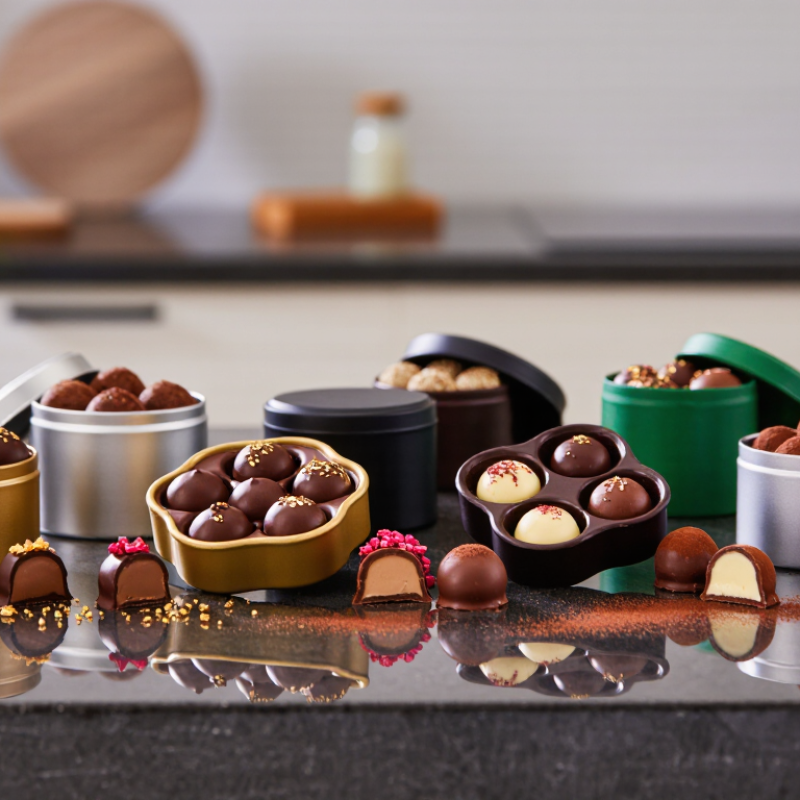
A chocolate truffle tin suitable for global buyers must protect delicate chocolates through storage, handling, and long-distance shipping. A snug lid helps prevent movement, while a food-contact-safe liner can reduce contact with metal and limit grease marks. Check the tin’s dimensions, weight, and stacking strength too. Small details matter. A dented corner can make a gift tin feel less special, even when the truffles arrive intact.
Temperature and moisture deserve attention. Truffles may soften in warm transit or develop surface changes after temperature swings, so packaging should be tested under realistic shipping conditions. No tin can replace a suitable product formulation or controlled storage. Buyers should also review ingredient, allergen, and date information for each destination market, then confirm local packaging and labeling requirements with qualified suppliers. Requirements vary. Even experienced buyers can overlook a translation or a climate difference.
Tips: Request samples and test them on a planned shipping route. Check the seal, inner tray, and label readability under ordinary light. Ask for documented shelf-life and packaging details, but verify claims independently. A beautifully printed tin is useful; a practical, protective one is better. I would not judge suitability from appearance alone.
When comparing chocolate truffle tins, check the piece count, net weight, and tin dimensions together. A 200-gram tin may hold fewer pieces if each truffle has a thick shell. Ask for a sample and inspect the lining, lid fit, and dividers. Loose pieces can scuff during a long journey. Check the seams.
Ingredients matter just as much. Compare cocoa percentage, filling type, and declared allergens, then review shelf life and recommended storage temperature. The International Cocoa Organization’s 2023/24 estimates put global cocoa production at about 4.4 million tonnes, a reminder that supply conditions can shift. Buyers should request clear origin and batch information rather than assume a high cocoa percentage guarantees consistent flavor.
Packaging deserves a close look. OECD’s Global Plastics Outlook (2022) reports that packaging accounted for 40% of plastic waste in 2019. A metal tin may be reusable, but its coating, inserts, and local recycling options still matter. Check whether the inner tray separates easily and whether labels show ingredients, net weight, and dates clearly. A polished exterior is useful; it is not enough. I would also test whether the tin stays secure after repeated opening.
Ten leading chocolate truffle tins stand out through more than decorative packaging. This editorial shortlist weighs ganache texture, cocoa character, ingredient clarity, freshness protection, and gift appeal. The ten styles span dark ganache, milk praline, hazelnut, caramel, coffee, citrus, raspberry, sea-salt, plant-based, and single-origin assortments. Small details matter: a clean snap of chocolate, a soft center, and a lid that closes firmly after opening. Packaging matters.
Market potential is substantial, though not every chocolate buyer wants premium truffles. Fortune Business Insights’ 2023 chocolate market report valued the global market at US$119.39 billion and forecast US$219.54 billion by 2032. That broad category figure is not truffle-specific, so it signals context rather than guaranteed demand. For global buyers, compact tins can simplify gifting and display, while clear ingredient and allergen information supports more confident purchasing. A handsome tin cannot fix stale ganache. Nor does a high cocoa percentage guarantee a balanced bite. The strongest choices pair consistent filling with durable packaging and flavors suited to different tastes.
A truffle tin must protect more than appearance. A snug lid, fitted insert, and food-contact liner help limit movement, odor transfer, and moisture exposure. Yet metal alone does not guarantee a tight seal. Test the finished pack with real truffles, especially when fillings contain cream or fruit. Heat leaves evidence. Temperature swings can soften centers and encourage chocolate bloom, so keep cartons cool, dry, and stable during storage and transit.
Shelf life depends on the recipe, production hygiene, and packaging—not the tin’s appearance. Set a best-before period using product-specific testing, and mark each lot clearly for stock rotation. FAO’s 2019 State of Food and Agriculture estimated that 14% of food is lost between harvest and retail; this broad figure is not specific to confectionery, but it highlights the value of careful handling. For international shipments, use snug dividers, protective outer cartons, and a transit plan suited to seasonal heat. A small weakness matters. I would not assume a premium-looking tin can compensate for poor temperature control or untested shelf-life claims.
Choosing a truffle tin starts with how shoppers will use it, not just how polished it looks. In gift-focused markets, a compact tin with a fitted insert can protect delicate chocolates and feel ready to present. For everyday retail, a lighter, stackable shape may matter more than elaborate decoration. Check local shelf dimensions and typical basket sizes. Small details decide.
Taste and protection must work together. Ask suppliers for product specifications, allergen information, storage guidance, and samples from a recent production run. Inspect the seal and lid fit, then check whether truffles shift during a simple transit test. Compare tin capacity with the actual chocolate size; excess empty space can make a pack look underfilled. Seasonal heat and humidity may affect texture, so confirm storage conditions before planning shipments. One sample is useful, but it cannot reveal every production variation. Verify freshness or recyclability claims with clear documentation.
Tips: Place a filled tin in a bag and carry it for a short journey. Check for rattling, scuffed coatings, or loose lids. Then ask local buyers which format feels practical, not merely attractive.
| Rank | Truffle Tin Format | Typical Pack Size | Approx. Tin Dimensions | Best Market Fit | Key Buyer Consideration | Shipping and Storage Check |
|---|---|---|---|---|---|---|
| 1 | Classic assorted gift tin | 12 pieces; approximately 150 g | 16 × 12 × 4 cm | General gifting and specialty retail | Choose a balanced mix of familiar flavors and clearly identify allergens on the label. | Confirm the filling’s shelf life and storage instructions with the manufacturer before setting import timelines. |
| 2 | Compact tasting tin | 4 pieces; approximately 50 g | 9 × 7 × 3 cm | Travel retail, sampling, and checkout displays | Keep the pack easy to open and make the net weight and piece count easy to see. | Check that the tin and inner tray protect the truffles from movement during parcel handling. |
| 3 | Premium assortment tin | 16 pieces; approximately 200 g | 19 × 15 × 5 cm | Premium gifting and seasonal promotions | Use an organized insert to separate flavors and prevent delicate coatings from rubbing together. | Allow for the larger gift-pack volume when calculating case dimensions and freight costs. |
| 4 | Dark chocolate selection tin | 10 pieces; approximately 125 g | 15 × 11 × 4 cm | Markets with demand for higher-cocoa chocolate | State cocoa content accurately and check that all flavor and ingredient descriptions meet local rules. | Protect the product from heat and rapid temperature changes that can affect chocolate appearance. |
| 5 | Milk chocolate family tin | 15 pieces; approximately 180 g | 18 × 13 × 5 cm | Family sharing and mainstream confectionery retail | Make milk allergen information prominent and verify ingredient translations for each destination market. | Confirm the required storage conditions for the specific recipe and intended distribution season. |
| 6 | Individually wrapped truffle tin | 12 pieces; approximately 150 g | 17 × 13 × 5 cm | Office sharing, hospitality, and gifting | Check that each wrapper is food-contact suitable and that the added packaging is recyclable where claimed. | Assess how the wrappers and tin perform under the expected transport conditions. |
| 7 | Two-layer assortment tin | 20 pieces; approximately 250 g | 18 × 14 × 7 cm | Large-format gifts and premium seasonal ranges | Ensure the divider keeps the upper layer from pressing on the lower layer during handling. | Check stackability and outer-carton protection; the taller pack may need additional case support. |
| 8 | Mini truffle sharing tin | 8 pieces; approximately 100 g | 12 × 9 × 4 cm | Small gifts, corporate giveaways, and curated hampers | Balance a compact footprint with enough room for mandatory label information in the destination market. | Review the tin’s net-to-gross weight ratio when comparing packaging and shipping costs. |
| 9 | Regional flavor assortment tin | 9 pieces; approximately 110 g | 14 × 10 × 4 cm | Markets where local or regionally familiar flavors support product discovery | Validate flavor appeal with local buyers and check ingredient, allergen, and naming requirements. | Confirm that any flavor-specific ingredients are permitted and correctly declared in the destination market. |
| 10 | Refillable keepsake tin | 12 pieces; approximately 150 g | 16 × 12 × 5 cm | Gift shops and buyers seeking reusable packaging | Use a durable, food-safe inner pack; avoid environmental claims that cannot be substantiated. | Check lid fit and corrosion resistance, especially if the tin may be stored or reused in humid conditions. |
Pack sizes and tin dimensions are illustrative planning benchmarks, not specifications for a particular product. Final dimensions, shelf life, storage conditions, labeling, allergen declarations, and import requirements should be confirmed with the manufacturer and checked against the regulations of each destination market.
Strong choices combine smooth ganache, clear ingredients, freshness protection, and gift-ready packaging. Small details decide.
Useful assortments may include dark ganache, milk praline, hazelnut, caramel, coffee, citrus, raspberry, and sea-salt flavors. Plant-based and single-origin options add variety.
Gift markets may prefer compact tins with fitted inserts. Everyday retailers may value lighter, stackable shapes. Not always.
A firm lid helps protect the chocolates after opening. It also reduces movement during carrying and short-distance transport.
Request specifications, allergen details, storage guidance, and recent production samples. One sample helps, but it cannot reveal every variation.
Put a filled tin inside a bag and carry it briefly. Check for rattling, scuffed coatings, loose lids, or shifted truffles.
No. A beautiful tin cannot repair stale ganache or an unbalanced flavor. I might still overvalue appearance.
Seasonal heat and humidity may change texture. Confirm storage conditions before shipping or planning retail displays.
Excess empty space can make a tin look underfilled. A fitted insert creates a steadier, more convincing presentation.
No. A 2023 industry estimate valued the global chocolate market at US$119.39 billion. That figure is broad, not truffle-specific.
Choosing the right Chocolate Truffle Tins for international markets requires more than comparing flavors. Global buyers should evaluate chocolate quality, filling variety, texture, ingredient transparency, tin design, portion size, and overall market appeal. A successful product should offer a balanced combination of premium taste, attractive presentation, reliable quality, and pricing that fits the target audience. Comparing ten leading options by craftsmanship, versatility, gifting potential, and consumer preferences can help buyers identify products suitable for different retail channels and regional tastes.
Packaging, shelf life, and shipping performance are equally important. A durable, well-sealed tin can help protect delicate truffles from moisture, heat, and handling during transportation, while clear storage guidance supports product quality after arrival. Buyers should also consider seasonal demand, customs documentation, labeling requirements, and local purchasing habits. By matching product style, pack size, presentation, and logistics with the needs of each market, importers and retailers can select Chocolate Truffle Tins that are appealing, practical, and commercially competitive.